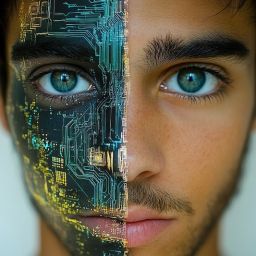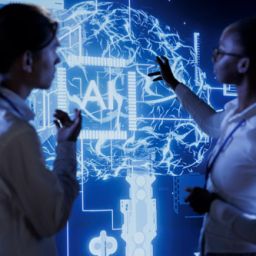



The technological landscape in 2026 will be defined by intelligent automation, a focus on sustainability, and a fundamental shift in how humans and machines collaborate. As the World Economic Forum predicts disruption for a significant percentage of current roles, new, technology-centric career opportunities are rapidly emerging.
1. The Autonomous AI Revolution
Artificial Intelligence is moving beyond simple assistance to become fully self-directed. The key trends in this shift are:
- Agentic AI Takes Charge: AI is transitioning from "copilot" to autonomous agent, capable of reasoning, planning, and executing complex, end-to-end workflows (such as a marketing campaign or logistics routing) without human intervention.
- Career Focus: Demand will grow for experts in AI governance, prompt design, and professionals who can manage and scale these intelligent systems ethically.
- Generative AI Matures (GenAI 2.0): GenAI is graduating from creative experimentation to enterprise-grade integration. This includes advanced, multimodal systems that securely combine text, code, and structured data, often fine-tuned with proprietary information using techniques like Retrieval-Augmented Generation (RAG).
- Career Focus: New roles are opening for specialists who can deploy, fine-tune, and govern generative models at scale.
- Mandatory AI Governance: With regulations like the EU AI Act coming into effect, AI governance is becoming operational rather than optional. Companies must ensure their models are transparent, fair, and free of bias to avoid penalties and build brand trust.
- Career Focus: Professionals who bridge ethics, technology, and compliance—such as AI risk managers and bias evaluators—will be essential.
2. The Future of Work and Development
The creation of software and the organization of the workplace are undergoing dramatic change.
- Democratized Development: The rise of Low-Code/No-Code platforms, enhanced by AI assistance, is enabling business users (not just IT professionals) to create enterprise software rapidly, moving from months of coding to hours of prototyping.
- Career Focus: Value lies in experts who can blend workflow orchestration with prompt-driven development and low-code logic.
- Human-AI Synergy: AI tools are evolving into true co-creators, actively participating in team tasks from content generation to code writing. This Human-AI collaboration maximizes productivity by combining human judgment with algorithmic speed.
- Career Focus: Professionals must master responsible AI integration, effective prompting, and managing feedback loops to optimize these hybrid workflows.
3. New Frontiers: Sustainability and Immersive Tech
Two other major areas are driving technological innovation:
- Green Computing:Sustainable technology is now a competitive necessity, driven by energy costs and investor scrutiny. Green computing practices—like carbon-aware scheduling and energy-efficient data centers—are being adopted to achieve performance goals while meeting environmental targets.
- Career Focus: The need for professionals who can link IT strategy with environmental accountability, such as sustainable IT designers and carbon analysts, is growing.
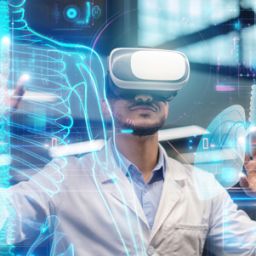
- Immersive Workspaces:Augmented Reality (AR) and Spatial Computing are moving into the essential workplace, with lighter hardware and smarter software creating seamless digital-physical interfaces for design, remote support, and professional training. This is a core component of Industry 5.0, which blends productivity with human-centricity and sustainability in smart factories.
- Career Focus: Opportunities are emerging for skills in AR design, 3D modeling, and human-computer interaction.